

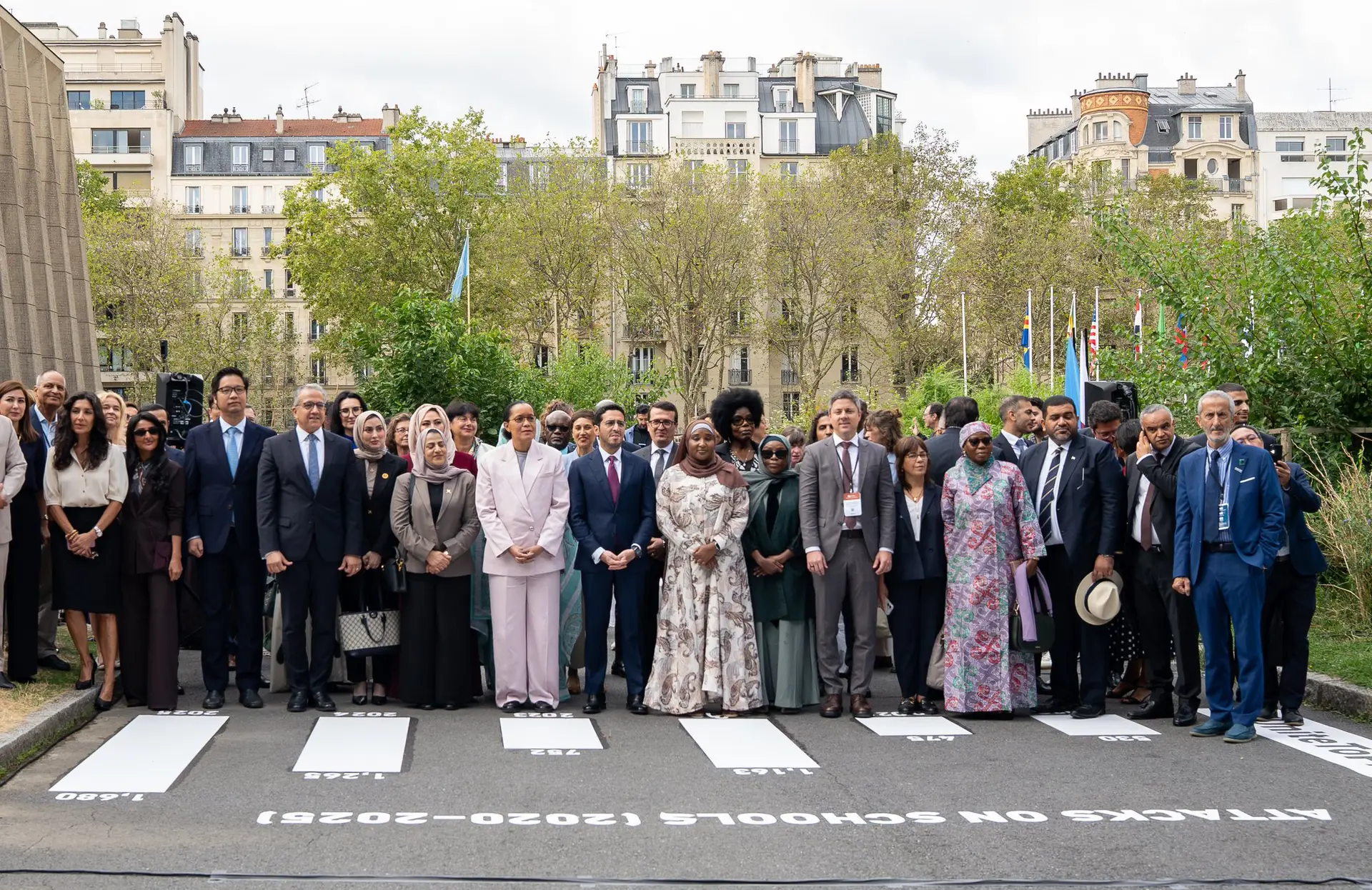
Geneva: The Education Above All (EAA) Foundation, in collaboration with international partners, has launched a global visual activation titled “The Crosswalk” in Paris and Geneva to mark the International Day to Protect Education from Attack, observed annually on September 9.
The initiative transforms data on attacks against education into an interactive visual experience, highlighting the alarming rise in violations targeting schools, universities, teachers and students worldwide.
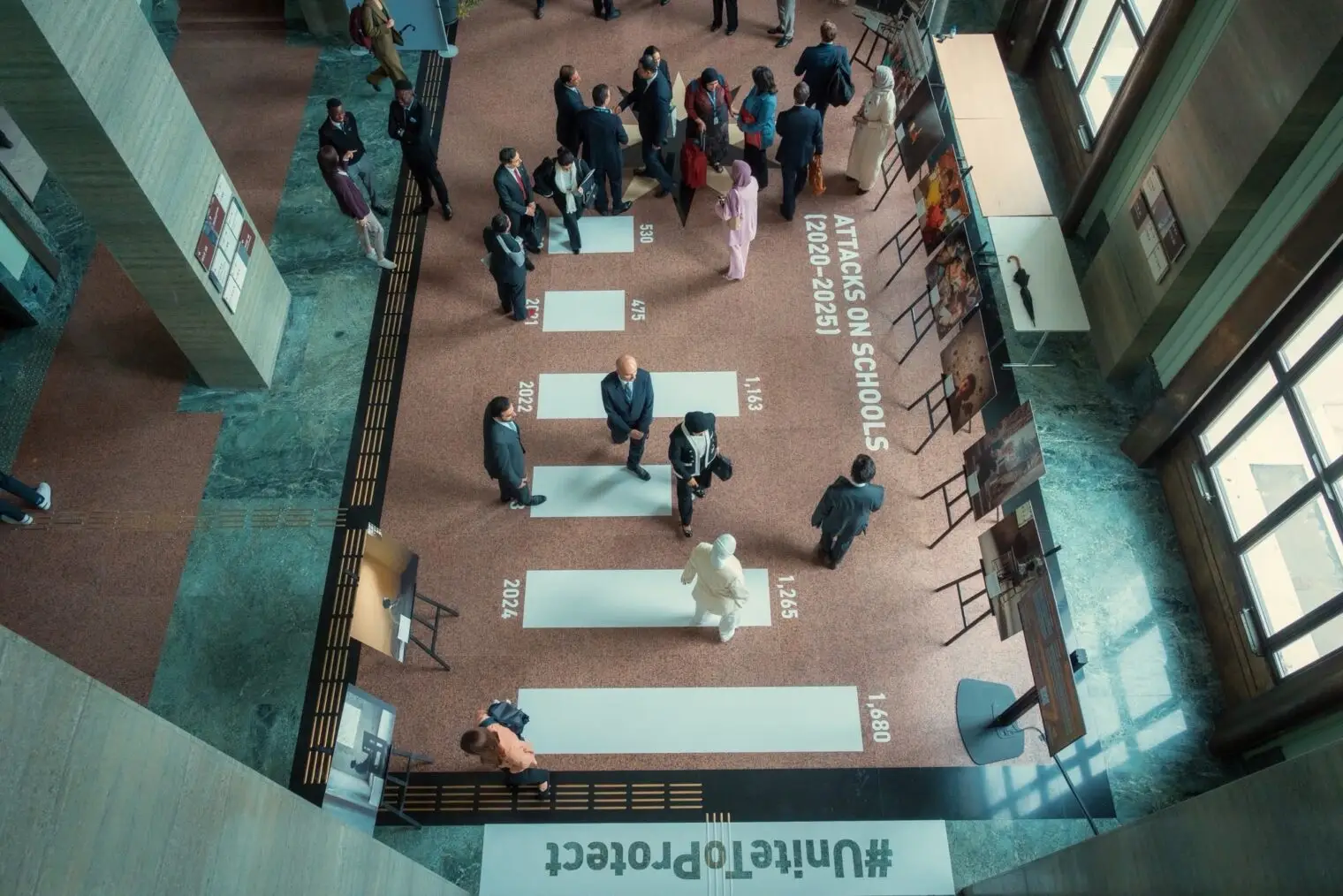
According to EAA, the installation uses pedestrian-crossing stripes as a visual timeline of verified attacks on education, with each stripe representing a year and the corresponding number of recorded attacks.
In Paris, EAA, UNESCO and the Permanent Delegation of the State of Qatar to UNESCO are jointly presenting The Crosswalk at UNESCO Headquarters from September 9 to 13. The installation features a digital display presenting key facts and campaign messages, along with a QR code linking to UNESCO’s Preventative Plan of Action to Protect Education from Attack.
Visitors are also invited to engage with the question: “Can Education Survive Attack?”
By bringing the campaign into a diplomatic and policy-focused setting, the activation seeks to raise awareness of the growing threats facing education and underline the importance of international cooperation to safeguard learning during crises and conflicts.
In Geneva, the Permanent Mission of the State of Qatar to the United Nations Office in Geneva, in coordination with the Global Coalition to Protect Education from Attack, is hosting a high-level event at the Palais des Nations. The gathering brings together representatives of governments, UN agencies and international organizations.
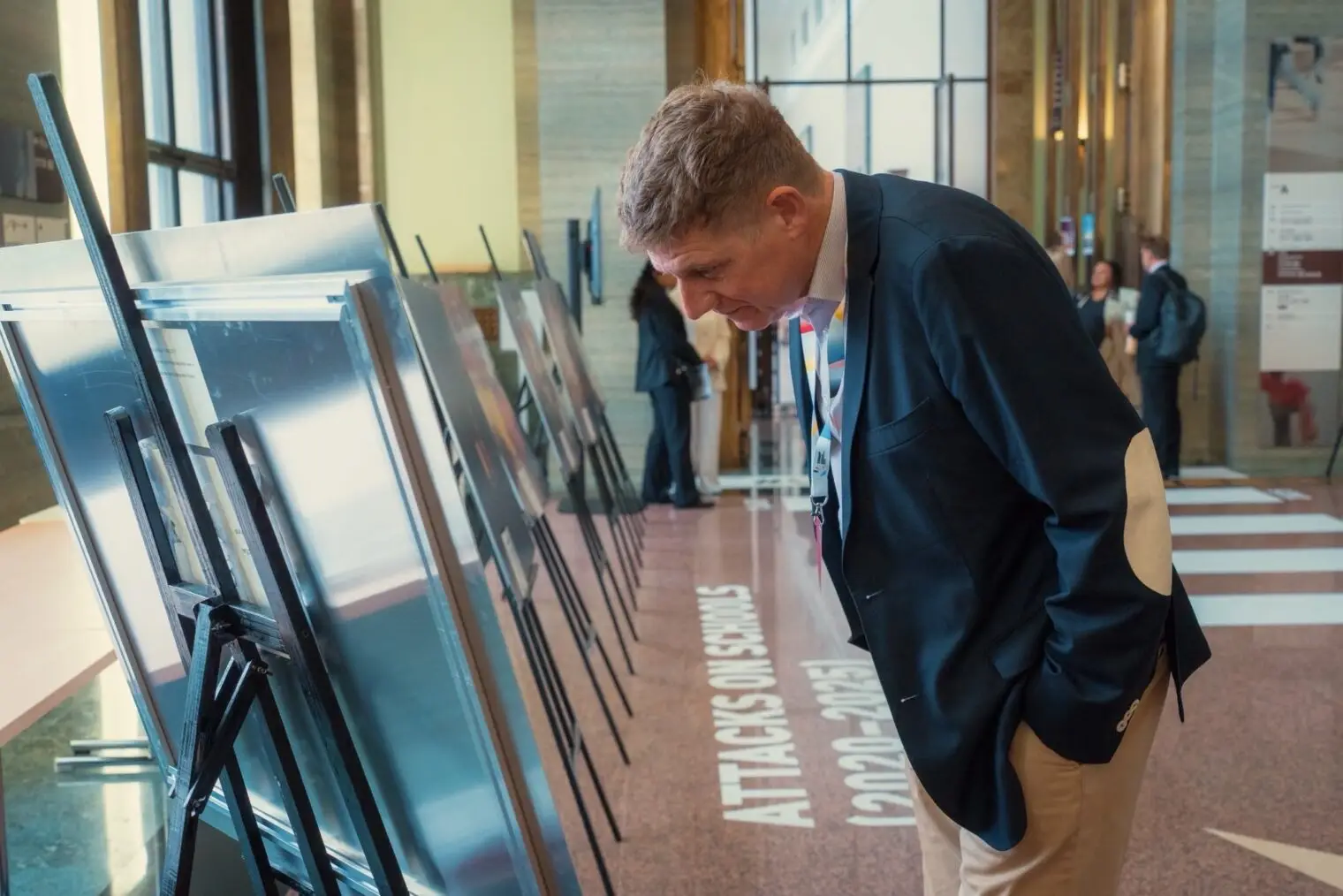
The Crosswalk forms part of the Geneva event alongside photographs and digital content documenting the experiences, determination and resilience of learners and communities affected by conflict and insecurity, as well as their efforts to keep education going under extremely challenging circumstances.
Through the global #UniteToProtect campaign, this year’s observance also provides a platform for governments, international organizations, civil society, educators, young people and the wider public to express solidarity and reaffirm the importance of protecting education before, during and after crises.
EAA Foundation Chief Executive Officer Mohammed Al Kubaisi emphasized that protecting education requires more than rebuilding schools after they have been damaged.
“Education can survive attack, but only if we choose to build systems capable of survival,” he said, stressing that schools, teachers and children must never be treated as legitimate targets or collateral damage.
He highlighted the need for preparedness, safe learning pathways, alternative education solutions, psychosocial support and accountability for those responsible for attacks on education.
The International Day to Protect Education from Attack was established following a resolution presented by the State of Qatar, spearheaded by Her Highness Sheikha Moza bint Nasser, Chairperson of Qatar Foundation for Education, Science and Community Development. The resolution was unanimously adopted by the United Nations General Assembly in 2020.
The international observance draws attention to the millions of children and young people whose education is disrupted by war and conflict and underscores education’s status as a fundamental right.
According to the latest Education Under Attack 2026 report by the Global Coalition to Protect Education from Attack, at least 9,259 attacks on education and incidents involving the military use of schools and universities were recorded in 2024 and 2025, an increase of more than 50 percent compared with the previous reporting period.
The attacks affected at least 10,600 students, teachers, professors and education personnel, while the highest incidence of attacks was recorded in Colombia, the Democratic Republic of the Congo, Ethiopia, Haiti, Palestine and Ukraine. The report also documented more than 2,100 cases of military use of schools and universities.
EAA stressed that education is far more than a service delivered in classrooms. It is a fundamental right and a source of protection, stability, dignity and hope for children, young people, families and communities affected by conflict.
When education comes under attack, the consequences extend well beyond damaged buildings, disrupting childhoods, weakening communities and threatening long-term recovery.
Photos: EAA/UNESCO