


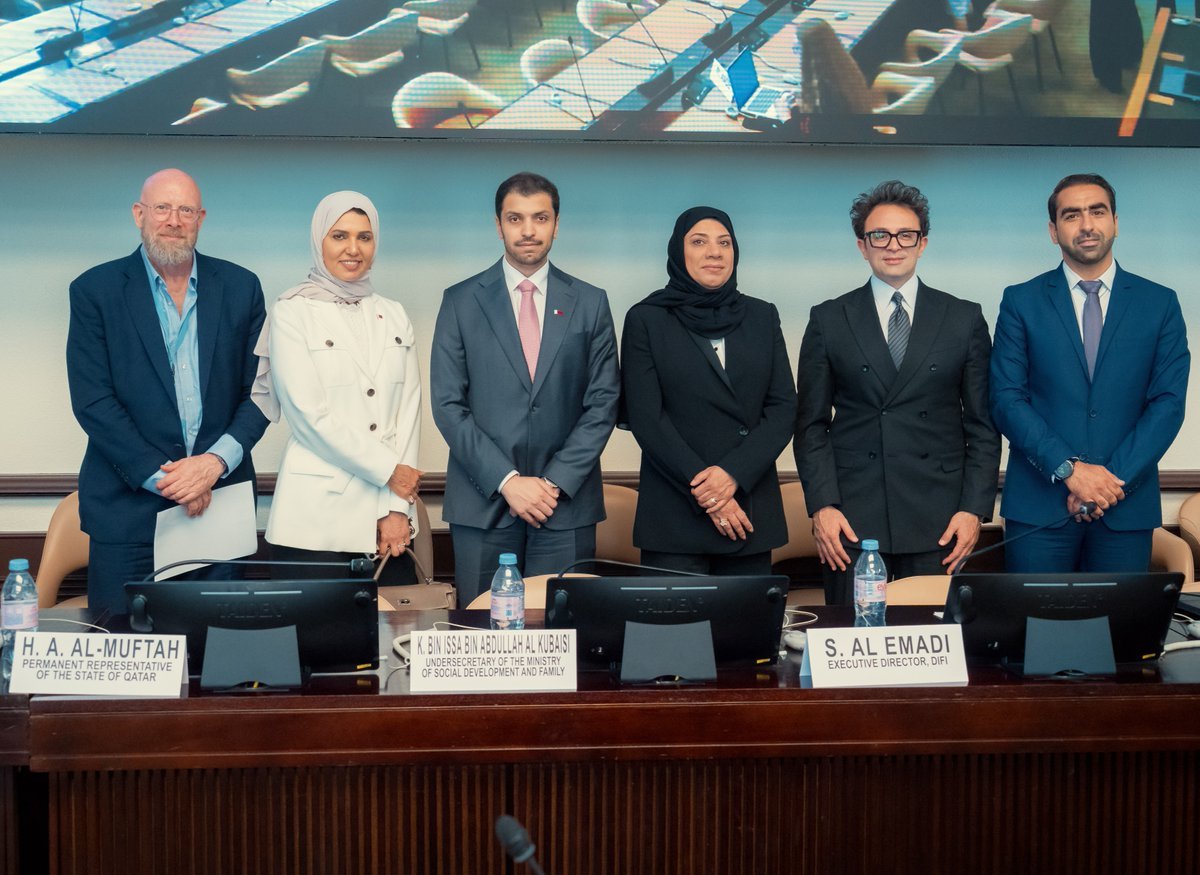
Geneva: The Permanent Mission of the State of Qatar to the United Nations Office in Geneva, in cooperation with the Doha International Family Institute (DIFI), organized a side event titled “Family Well-being and Resilience in Times of Conflict” on the sidelines of the 62nd session of the Human Rights Council in Geneva.
The event brought together representatives of diplomatic missions, international and regional organizations, and civil society groups to discuss the challenges facing families in conflict-affected regions and the importance of family-centered policies in humanitarian and development efforts.
In her opening remarks, HE Permanent Representative of the State of Qatar to the United Nations Office in Geneva, Dr. Hind Abdulrahman Al Muftah, reaffirmed Qatar’s commitment to placing family issues at the forefront of multilateral action.
She highlighted Qatar’s leadership in advancing the Human Rights Council’s “Protection of the Family” resolution since 2014, describing it as a key initiative that reflects states’ obligations under international human rights conventions and underscores the family’s role in promoting and safeguarding human rights.
Dr. Al Muftah stressed that protecting and empowering families must remain central to national and international policies as well as sustainable development agendas. She noted that Qatar continues to support research and evidence-based policymaking aimed at addressing family-related challenges and strengthening family well-being.
She also underscored Qatar’s humanitarian efforts to support families affected by conflicts, particularly in the Gaza Strip, where the country has provided assistance through governmental and non-governmental humanitarian and development institutions. Qatar currently hosts a number of injured Palestinians and their families, providing them with healthcare and social services.
The Permanent Representative further highlighted Qatar’s broader humanitarian contributions to refugee, displaced, and conflict-affected families worldwide. She pointed to Qatar’s role in reuniting Afghan children and families and facilitating the reunification of Ukrainian and Russian children with their families amid the ongoing conflict.
Delivering the keynote address, HE Undersecretary of the Ministry of Social Development and Family Khalifa bin Issa Al Kubaisi emphasized that resilient societies are built by supporting families and enhancing their well-being.
He said that the most effective social and humanitarian policies are those that place families at the center of protection, recovery, and development efforts. He noted that this vision aligns with Qatar National Vision 2030 and the Ministry’s strategy, “From Care to Empowerment,” which focuses on strengthening family capabilities, promoting self-reliance, and enabling active participation in national development.
Executive Director of the Doha International Family Institute, Dr. Sharifa Al Emadi, highlighted the devastating impact of conflicts on children and families. Citing United Nations data, she noted that more than 473 million children, approximately one in five worldwide, currently live in conflict-affected areas, while nearly 48 million children have been forcibly displaced.
She stressed that traditional humanitarian responses often focus on temporary solutions, whereas a child’s well-being is closely linked to the stability and security of the family environment.
The event also featured contributions from HE UN Special Rapporteur on the Right to Education Farida Shahid, Vice-Chair of the UN Committee on the Rights of the Child Dr. Philippe Jaffe, and DIFI Director of Family Research and Policy Dr. Ahmed Aref. The discussion was moderated by Family Watch International’s UN Policy Director Hafez Al Hashemi.
Participants examined the social and humanitarian consequences of conflicts and crises on families and emphasized the family’s critical role as a source of care, protection, and emotional stability during periods of upheaval.
The discussions concluded with a call for integrated, evidence-based, and family-centered policies that strengthen family resilience, enhance social cohesion, and support communities affected by conflict and fragility around the world.