





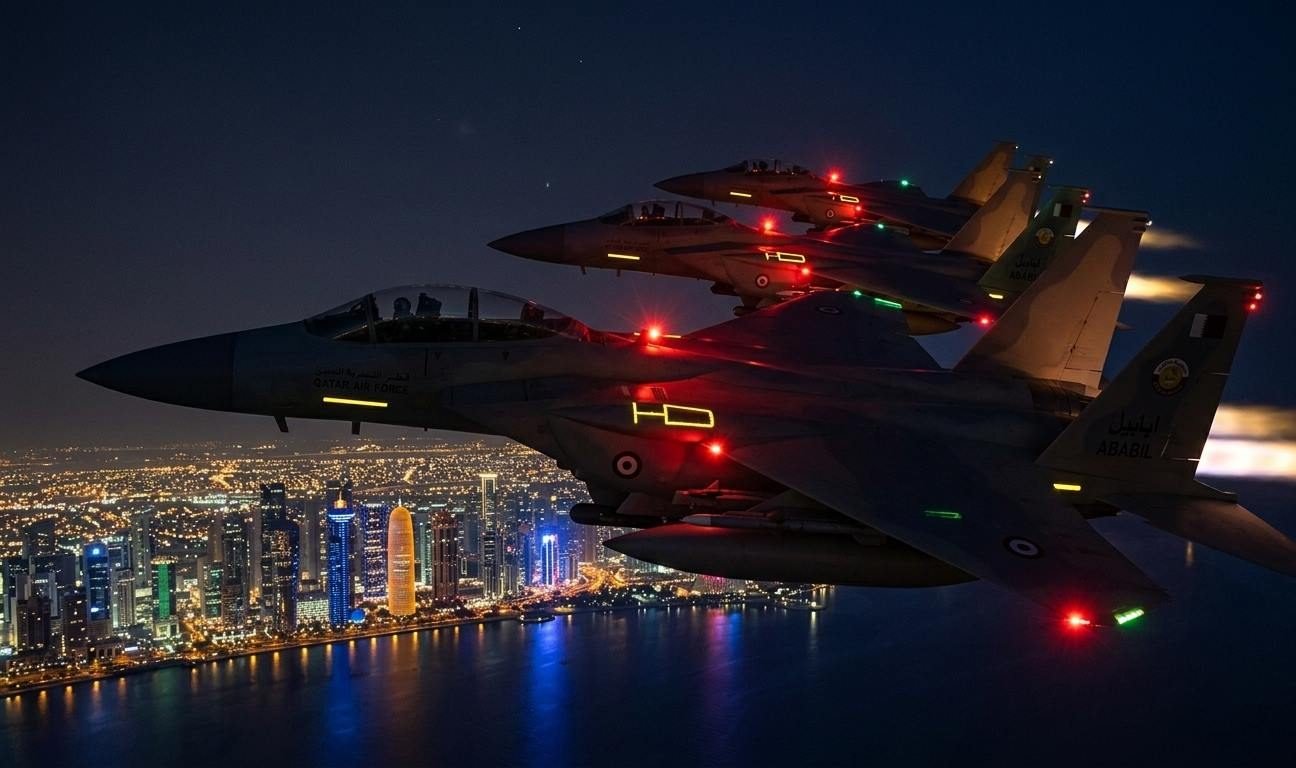
Doha: The skies over Doha were never meant to become a battlefield. Yet since the United States and Israel launched strikes on Iran on February 28, 2026, Qatar has found itself caught in a conflict it did not invite, did not start, and does not want. As Iranian missiles and drones continue to rain down on Gulf states, Qatar has responded not with panic, but with a clear-eyed strategy to defend its sovereignty, protect its people, and push relentlessly for peace.
The challenge Qatar faces is unlike anything it has faced in its modern history. Iranian strikes have hit vital locations, such as Hamad International Airport, Ras Laffan Industrial City, and Al Udeid Air Base; the very heart of the nation’s economy and security. Qatar’s Energy Minister confirmed that 17% of the country’s LNG exports have been disrupted, with the damage likely to take 3 to 5 years to repair fully. These aren’t just abstract geopolitical statistics; they are direct blows to the daily lives and well-being of every citizen and resident in Qatar. And yet, Qatar has held firm, showing resilience in the face of adversity.
The road to peace runs through diplomacy. Qatar knows this better than anyone. Now the world must listen.
Qatar’s stabilization strategy:
- Air Defense: Qatar’s F-15s downed two Iranian Su-24 bombers and intercepted multiple drone and missile strikes, marking the first air-to-air kills for the Qatar Emiri Air Force. Allied UK Royal Air Force Typhoons also joined in shooting down attack drones directed at Qatar.
- Internal Security: Qatari authorities arrested 10 individuals suspected of ties to Iran’s Islamic Revolutionary Guard Corps, uncovering two cells allegedly tasked with espionage and drone-enabled sabotage. This swift action highlighted Qatar’s security forces’ readiness and vigilance against threats from within.
- Diplomatic Clarity: Qatar’s Foreign Ministry spokesperson made clear that Qatar is not engaging in direct mediation between the US and Iran, but fully supports all diplomatic efforts to end the war, a nuanced position that preserves Qatar’s credibility without entangling it further.
- Regional Coordination: Coordination with Gulf neighbors is anchored on three pillars: ensuring a cessation of attacks, pushing for a diplomatic solution, and coordinating on escalation stances.
- US Partnership: US Vice President Vance praised Qatar’s “active role in promoting regional stability and enhancing global energy security,” signaling that the strategic partnership, though under strain, remains intact.
Qatar’s Foreign Ministry has warned that Iranian attacks are having a “catastrophic effect” on the countries’ relationship, saying Iran has crossed “many red lines.” These are not merely diplomatic words; they signal that even a nation known for its patience and mediation has its limits.
Gulf leaders, including those in Qatar, never wanted this war. Privately, they have expressed frustration with Washington over the chaos now gripping the region. But rather than buckle under pressure, they have closed ranks. Qatar knows that leaving Iran unchecked threatens the very foundation of stability and prosperity that millions of its residents rely on.
Qatar’s message to the world, and to its own people, is one of resilience. The missiles may come, but institutions hold. Airports reopen. Schools resume. Life goes on. In a region consumed by fire, that steadiness is not just admirable; it is an act of courage.
References: MOFA, MOD, QNA, and Al Jazeera | Image: Illustration Purpose Only


