





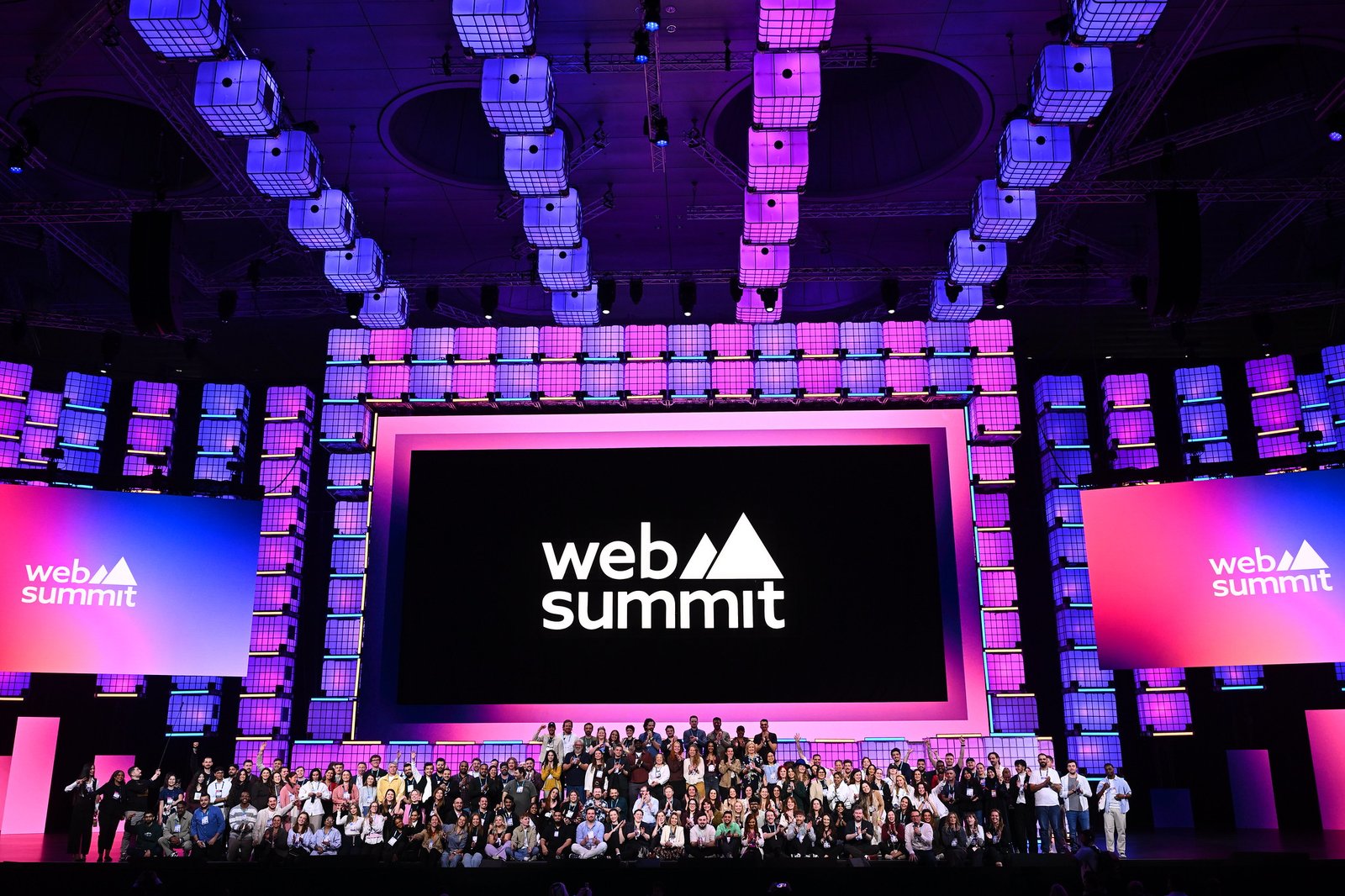
Something felt different at the Doha Exhibition and Convention Centre this February. The third edition of Web Summit Qatar wasn’t just a tech conference; it was a declaration. Qatar has made up its mind: it is no longer content to sit at the edges of the global innovation economy. It wants to help shape it. More than 30,000 attendees from over 120 countries flooded into Doha, and tickets had sold out well before the doors opened. For an event only in its third year, that kind of pull is remarkable.
For a long time, the Gulf’s role in tech was simple: write the cheques. Sovereign wealth funds quietly backed startups in San Francisco, London, and India, content to be investors rather than builders. Web Summit Qatar 2026 made it clear that the era is over. At the opening ceremony, Prime Minister Sheikh Mohammed bin Abdulrahman bin Jassim Al-Thani put it plainly: innovation is the world’s most valuable currency, and Qatar intends to print its own. The headline announcement was QAI, Qatar’s new national artificial intelligence company: a home-grown AI infrastructure built not just for Qatar’s own needs, but designed to offer its capabilities to partners around the world.
“We meet at a moment when innovation is the world’s most valuable currency. In Qatar, we do not want to simply watch the future arrive. We want to shape it, alongside partners from around the world.“
– H.E. Sheikh Mohammed bin Abdulrahman bin Jassim Al-Thani, Prime Minister of Qatar
But this went well beyond symbolic gestures. The Qatar Investment Authority announced a $2 billion expansion of its Fund of Funds program, pushing the total commitment to $3 billion. The goal isn’t just to get the world’s top VC firms to notice Doha, it’s to get them to stay. Twelve major venture capital firms have already set up shop in the city. The QIA’s thinking is smart: make it easy and low-risk for global investors to come in, and the deals, startups, and talent will follow and stick around.
The financial commitments were backed up by something equally important: a genuine promise of simplicity. Founders who registered a business during the summit were told they could have their company set up, banking sorted, and residency arranged within days. A new ten-year residency program for entrepreneurs, investors, and senior executives was announced, a clear message that Qatar isn’t just a conference destination. It wants to be where you actually build your company. The Qatar Development Bank also extended its Start from Qatar program through 2026, adding another piece to what is becoming a very coherent package for founders.
There was also a quieter but deeply meaningful shift happening on the ground. Around 1,637 startups showed off their work over the four days, and while 85 percent came from outside Qatar, proof of the summit’s global reach, the homegrown contingent stood out. Qatari startups were competing across fintech, mobility, gaming, sustainability, and Arabic-language AI, not just filling seats. The PITCH competition on the final day, sponsored by Jusour, pitted local ventures against international ones. The result was telling: Qatari founders are no longer just showing up to watch. They’re in the room to win.
Women founders made real strides at Web Summit Qatar 2026. 38% of the 1,637 startups there were women-led, up from 31% the year before. It’s a sign that the region’s startup scene is genuinely changing.
The numbers back it up: more than 77 Memoranda of Understanding were signed between Qatari entities and global tech companies during the summit. That’s a real commercial legacy, not just a busy schedule. Across 14 thematic tracks, covering everything from AI governance and fintech fraud to clean energy, digital health, and the future of sport, the program tackled the hard questions rather than dodging them. Does technology strengthen democracy, or does it deepen its fractures? Does AI genuinely transform healthcare, or does it just make things more complicated? These aren’t the questions of a conference chasing headlines. They’re the questions of one that’s starting to matter.
The timing matters too. Global venture capital markets have been under pressure since 2022, yet investor attendance at this year’s summit climbed 27 percent year-on-year. That gap tells a story: the Gulf is seen as a rare pocket of stability and long-term thinking in an industry that has had a turbulent few years. Qatar’s offer to the world, sovereign capital, clear regulations, tax efficiency, and a genuine welcome for international talent, is a combination that’s hard to find anywhere else. As Web Summit founder Paddy Cosgrave noted, the event has reached global significance in just three years. A decade ago, that would have seemed almost impossible.
What this edition proved, above all else, is that the partnership between Qatar and Web Summit is building real momentum. Every year, the networks run deeper, the startups get sharper, the investors get more committed, and the policy thinking gets more sophisticated. The summit has stopped being Qatar’s calling card to the world. It has become the engine driving Qatar’s rewriting of what a Gulf innovation hub can look like. The question of whether Doha can compete on the global technology stage has already been answered. The only question worth asking now is how far Qatar intends to go and how fast.
Statistics At-A-Glance
30,000+
Attendees
120+
Countries
1637
Total Startups
931+
Investors
247
Qatari Startups
427
Speakers
800+
Media Representatives
$ 3 Billion
Fund of Funds
Announcements & Policy Highlights
QAI: Qatar’s National AI Company
Qatar launched QAI, a sovereign artificial intelligence company tasked with delivering AI infrastructure and software systems domestically and to international partners, positioning Qatar as an AI provider rather than merely a consumer.
$3 Billion Fund of Funds
The Qatar Investment Authority’s venture capital Fund of Funds was expanded by $2 billion, bringing total commitment to $3 billion. The program has already anchored 12 major VC firms in Doha, with the expanded pool intended to attract further top-tier general partners.
10-Year Residency Program
A new long-term residency initiative for entrepreneurs, founders, investors, and senior executives was unveiled, offering a path to put down permanent roots in Qatar alongside a streamlined process for company formation, banking, and residency within days.
Start from Qatar Extended
Qatar Development Bank’s flagship startup support program was extended through 2026, ensuring the continuity of mentorship, access to funding, and ecosystem resources for early-stage companies across the region.
77+ MoUs Signed
Over the four days, more than 77 Memoranda of Understanding were signed between Qatari entities and global technology companies, translating summit conversations into legally committed partnerships across sectors, including AI, fintech, and infrastructure.
Conference Tracks at a Glance
The 2026 programme was structured around 14 thematic tracks, each anchored by a defining question that pushed beyond promotional framing toward genuine debate.
| Track | Central Question |
| AI Summit | Innovation versus security: where is the balance? |
| Fintech Summit | Can AI-led fraud prevention redefine regulation? |
| New Energy Summit | Will AI accelerate clean power or strain resources? |
| Government Summit | Is technology strengthening democracy or widening divides? |
| Sport Summit | Is the future athlete human, digital, or a hybrid? |
| Machine Summit | How are robotics, automotive, and spacetech keeping pace? |
| Health Summit | Is AI transforming healthcare, or complicating it? |
| Marketing Summit | How are brands using data and automation at scale? |
| Women in Tech | Fostering inclusion, leadership, and impact in tech |
| Startup Showcase | High-potential startups across key Qatar growth sectors |
Startup Ecosystem & PITCH Competition
Web Summit Qatar 2026 was the most globally diverse edition yet. Around 1,600 startups, from early-stage to growth-stage, showed up over the four days, and 85% of them came from outside Qatar. That alone says a lot about how seriously founders around the world are taking Doha as a place to connect with Gulf investors and break into regional markets.
The Startup Showcase gave a dedicated spotlight to homegrown Qatari companies, spanning everything from mobility and fintech to gaming, VR, clean energy, and AI built specifically for Arabic speakers. That last category is worth paying attention to. Arabic-language AI tools are still rare on the global stage, and seeing them front and center here felt like a meaningful moment.
The summit’s flagship pitch competition, sponsored by Jusour, wrapped up on the final day with early-stage startups pitching live to a panel of international investors and judges. For the founders involved, it was more than just a competition; it was a chance to get real validation from the right people and a reminder of just how much talent is emerging from Doha right now.
But one of the most talked-about moments of the entire summit actually happened on Opening Night. Issam Hijazi, a Palestinian-Jordanian-Australian founder, took the stage for his first major public appearance since his short-video app, Upscrolled, went from around 150,000 users to over 1 million in a single week. At its peak, it reached number one on both the US Apple App Store and Google Play. That’s the kind of story that stops a room.
Investor Sentiment and Market Context
Global venture capital has had a rough few years since 2022, so it says something that investor participation at Web Summit Qatar 2026 still grew by 27% year-on-year, hitting around 1,000 investors. A few things are driving that. Qatar brings serious sovereign capital to the table, willing to co-invest alongside private funds. Its regulatory environment is built for speed. And the government has made it clear this isn’t a one-off; they’re in it for the long haul.
The Investor Meeting Area ran structured one-on-one sessions between startups and investors across all four days, the kind of focused, no-fluff conversations that actually turn a conference badge into a term sheet. Qatar National Bank, as Diamond Sponsor, used the summit to lay out its digital transformation strategy under its ‘Thinking Beyond’ framework. The message was clear: traditional financial institutions aren’t sitting this one out.
Joseph Chan, Under Secretary for Financial Services of Hong Kong SAR, made a point that resonated across the room: institutions today are chasing transparency, certainty, and predictability, and Qatar has been quietly building exactly that. Cross-border digital currency projects like mBridge, which brings together the UAE, Thailand, and China, also came up in discussion. They’re a signal of something bigger: the region is no longer just participating in global financial infrastructure, it’s helping shape it.
Looking Ahead: Web Summit Qatar 2027
Web Summit Qatar 2027 is already locked in, returning to Doha from January 31 to February 3. It’ll be the fourth edition in the five-year partnership between Web Summit and the State of Qatar. With three strong years behind it, the 2027 event is set to push even further, deepening ties between Qatar’s growing innovation infrastructure, including the newly launched QAI, and the international founders and investors who now see Doha as a real, lasting destination.
For founders, the pitch is becoming hard to ignore: set up your company in days, not months, with competitive taxes, long-term residency options, and a direct line to one of the most well-funded sovereign wealth ecosystems on the planet. For investors, the growing Fund of Funds is a real reason to plant a flag in Doha rather than just passing through every January. And for the tech world more broadly, Web Summit Qatar has pulled off something that doesn’t happen often: in just three years, it has built a genuine new hub in the global innovation map, from scratch.
By: M Fayiz / Finara Anggraini
Reference: Web Summit Qatar / GCO / QNA


