


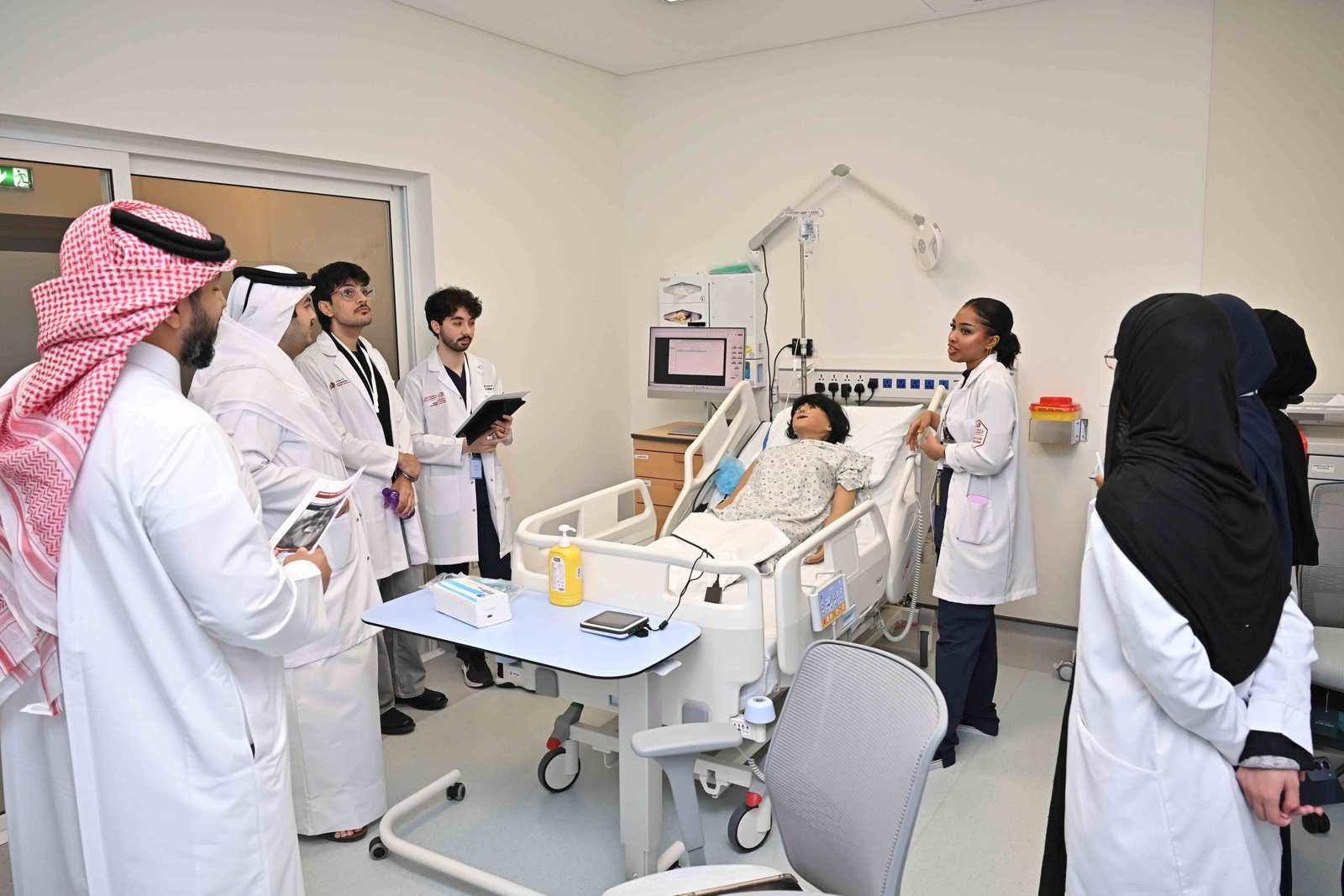
Doha: Qatar University (QU), represented by the QU Health sector and the Interprofessional Education (IPE) Program, in collaboration with the Tamayuz Simulation Center, successfully hosted its first simulation-based interprofessional education activity titled “When Infection Escalates: A Team-Based Simulation in Acute Care”. The initiative reflects QU’s commitment to experiential learning and preparing healthcare students for collaborative, team-based clinical practice.
The activity brought together 297 students from six health disciplines: nursing, pharmacy, medicine, dental medicine, physiotherapy, and biomedical sciences, organized into 48 interprofessional teams. The simulation focused on managing a complex acute infection case resulting from a dental abscess, enabling students to apply their knowledge collaboratively in a realistic clinical setting.
The successful conclusion of the first-ever interprofessional education simulation at the Tamayuz Simulation Center marks an important milestone for QU Health and for interprofessional learning in Qatar. This achievement reflects our continued commitment to preparing health professions students for collaborative, team-based practice in ways that are experiential, meaningful, and aligned with real-world healthcare needs.
Dr. Alla El-Awaisi, Advisor to VP for Health and Medical Sciences and Head of IPE Program
She added, “It is also a valuable addition to the IPE Passport Program, further enriching students’ developmental journey across exposure, immersion, and mastery. We are very proud of this step forward and keen to continue expanding interprofessional education opportunities, including strengthening its integration within clinical placements, so that students can experience collaborative practice across both simulated and real clinical settings.”
The successful execution of our first Simulation-Enhanced Interprofessional Education (Sim-IPE) activity marks a significant milestone for the Tamayuz Simulation Center and interprofessional education team. By bringing together students from across the five colleges of QU Health into a single, shared clinical experience, we are actively translating our commitment to collaborative clinical education into practice. This initiative showcases the unwavering support of QU Health in promoting world-class training environments where our future health professionals learn to communicate, collaborate, and deliver patient-centered care as a unified team—ensuring they are fully prepared for the realities of modern clinical practice.
Dr. Moustafa Al Hariri, Section Head of the Tamayuz Simulation Center
Participating students highlighted the transformative impact of the experience in strengthening their clinical confidence and reinforcing the importance of teamwork, communication, and shared responsibility in achieving optimal patient outcomes.
Yaman Aboualela, a fourth-year physiotherapy student, said:
“This experience strengthened my confidence in managing acute care cases and enabled me to apply my professional role in a realistic clinical setting. It also expanded my understanding of the role of physiotherapy in acute care, including preventing complications and supporting patient safety.”
Areej Hasna, a third-year biomedical sciences student, added:
“The simulation enhanced my understanding of interprofessional collaboration in managing critical conditions. It also highlighted the importance of laboratory data and effective communication in supporting clinical decision-making and delivering integrated patient care.”
The activity included a structured pre-briefing session, an immersive simulation, and a guided debriefing session that enabled students to reflect on their performance and teamwork. Feedback from participants and facilitators was highly positive, with constructive insights for future enhancement.
This initiative underscores QU’s commitment to advancing innovative educational models that integrate academic knowledge with practical application, enhancing graduate readiness and reinforcing the university’s role in supporting national development priorities.
Source: QU