





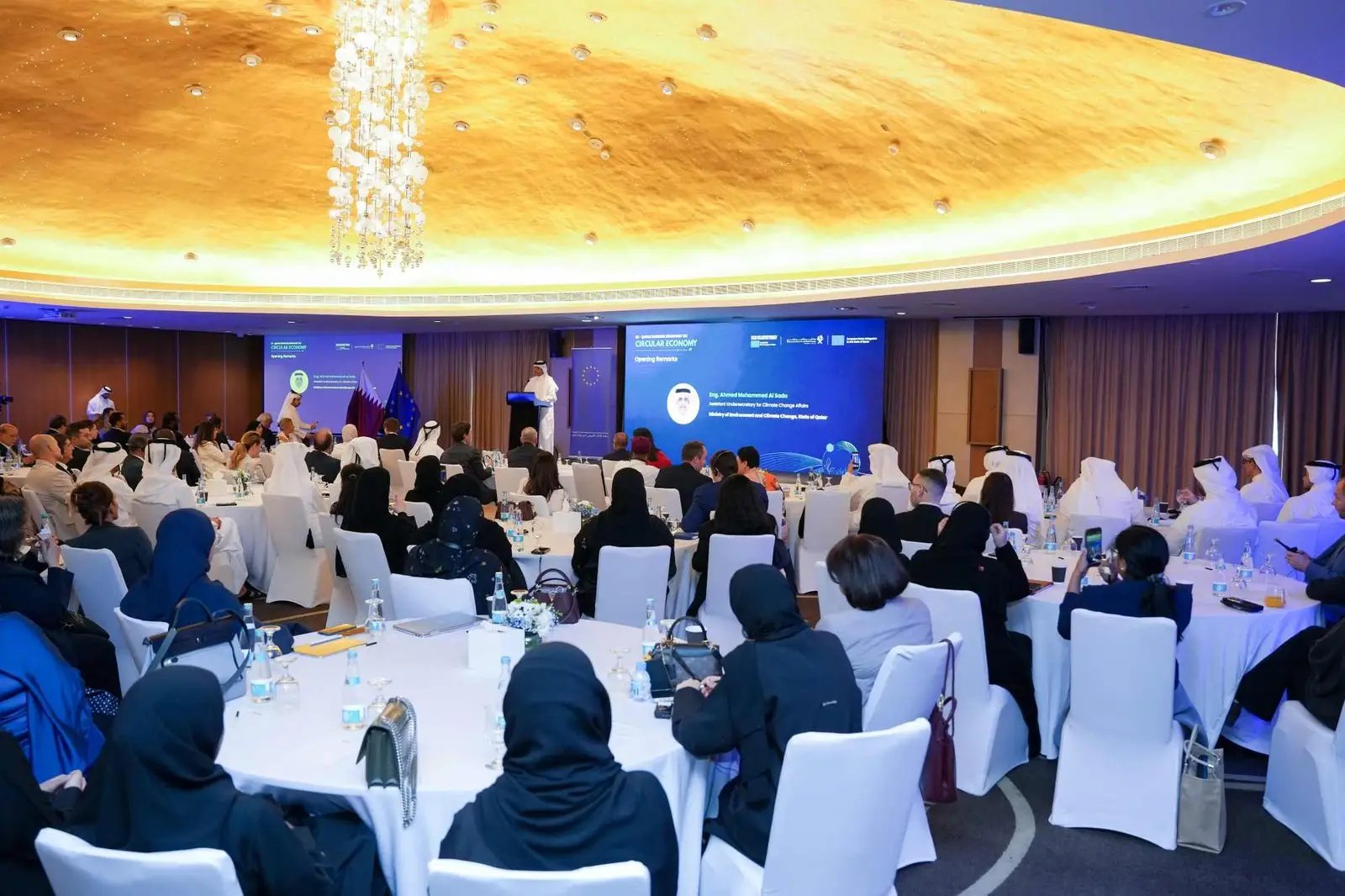
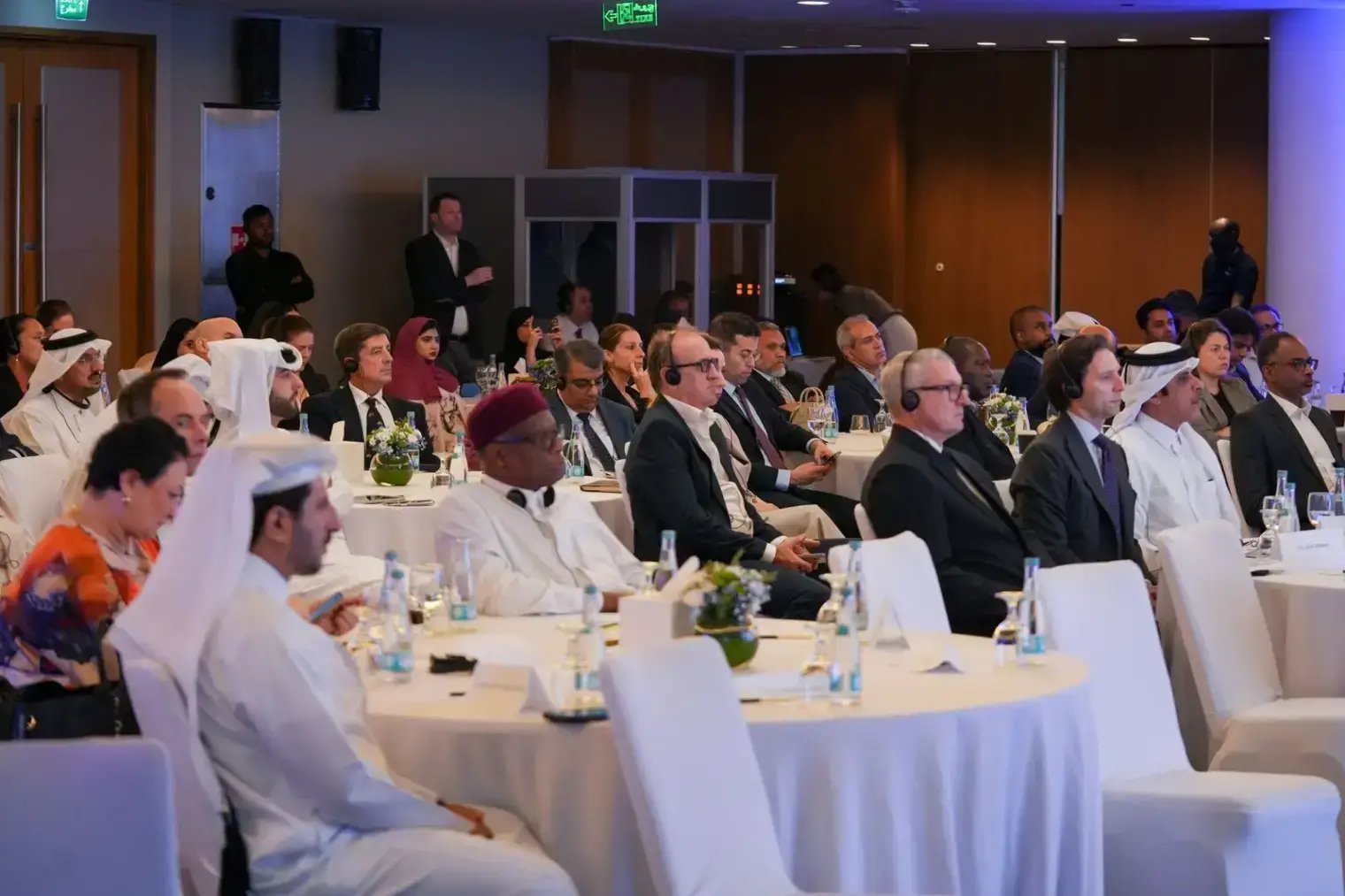
Doha: Qatar and the European Union have strengthened their dialogue on sustainable resource management and circular economy solutions through the EU–Qatar Business Breakfast on Circular Economy, held in Doha with the participation of senior government officials, industry leaders, researchers, innovators and sustainability experts.
Organised under the EU-GCC Cooperation on Green Transition Project, the business breakfast was held in collaboration with the European Union Delegation to the State of Qatar and Qatar’s Ministry of Environment and Climate Change. The event provided a platform for exchanging European and Qatari experiences while exploring practical opportunities for cooperation, investment, technology and knowledge exchange.

Held at the W Doha Hotel & Residences, the event focused on translating circular economy ambitions into practical and scalable solutions, with discussions covering resource efficiency, recycling, sustainable waste management and circular materials.

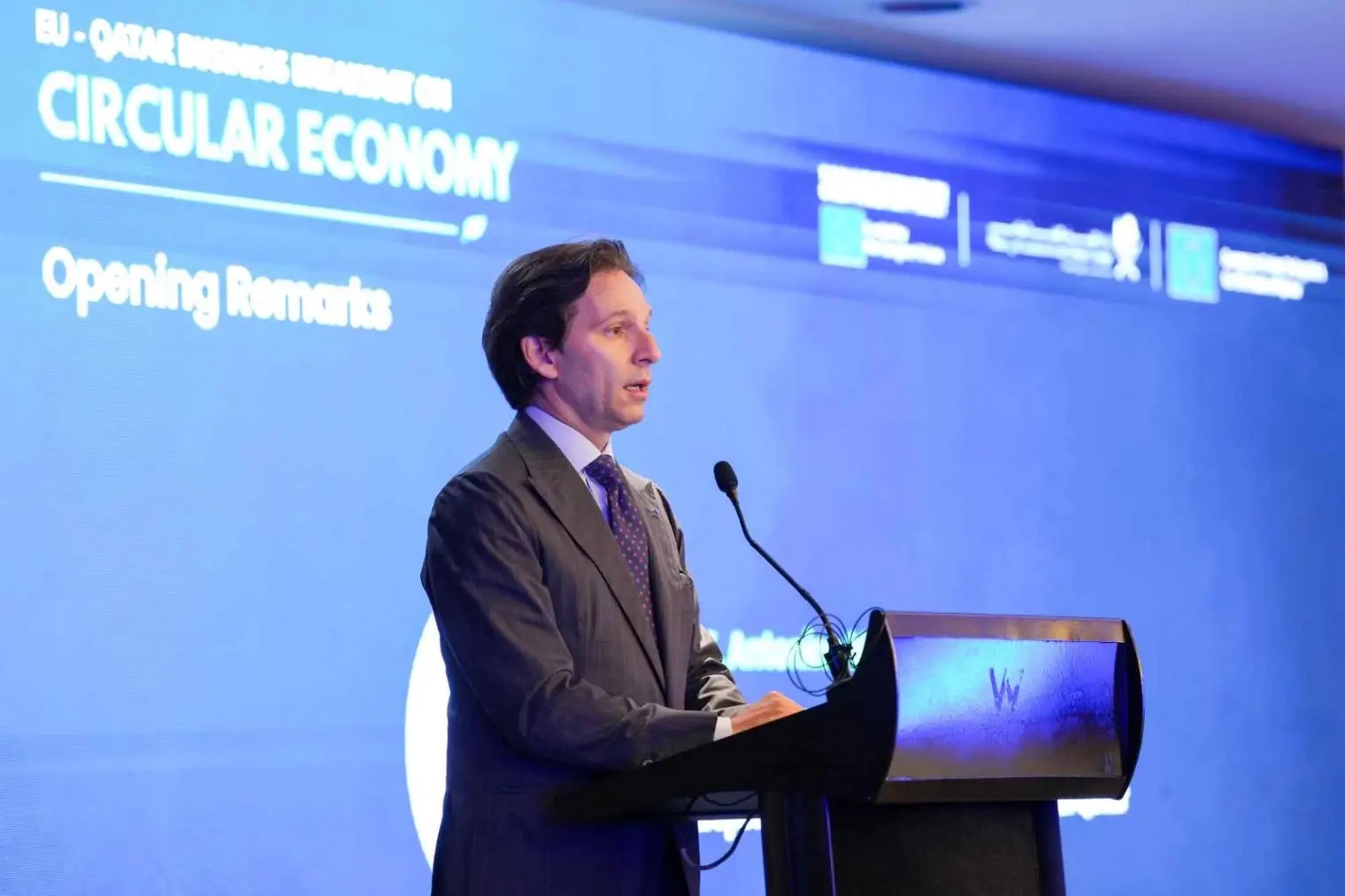
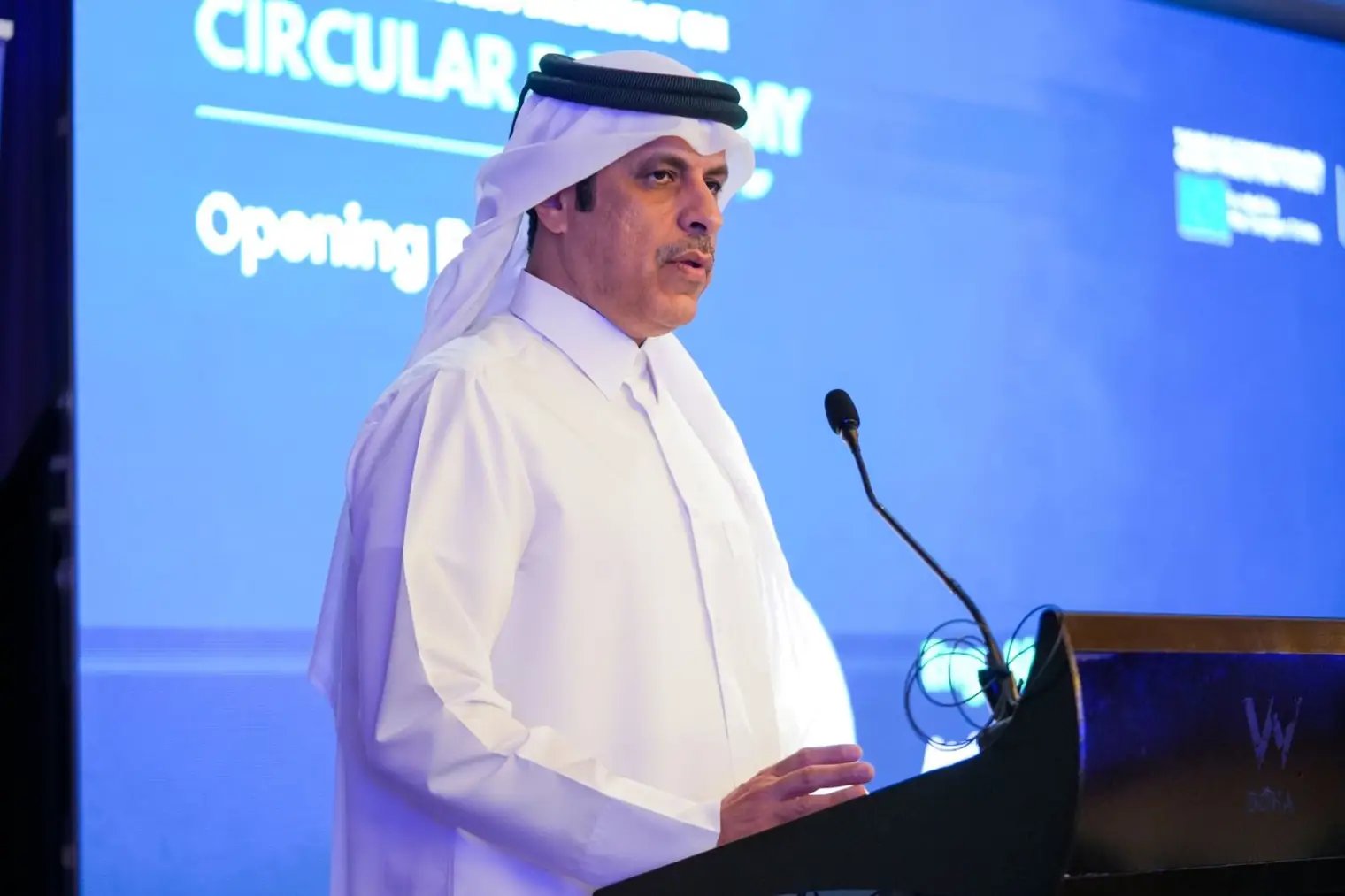
Speakers
The event opened with remarks by H.E. Antonino Maggiore, Ambassador of the European Union Delegation to the State of Qatar, and Eng. Ahmed Mohammed Al Sada, Assistant Undersecretary for Climate Change Affairs at the Ministry of Environment and Climate Change.
The opening programme also featured presentations by William Neale, Adviser on Circular Economy and Green Growth at the European Commission’s Directorate-General for Environment, who presented the EU perspective on circular economy policy and implementation, and Eng. Abdullah Jumah Almuraikhi, Director of the Green Development and Environmental Sustainability Department at Qatar’s Ministry of Environment and Climate Change, who outlined Qatar’s progress, priorities and implementation pathways.
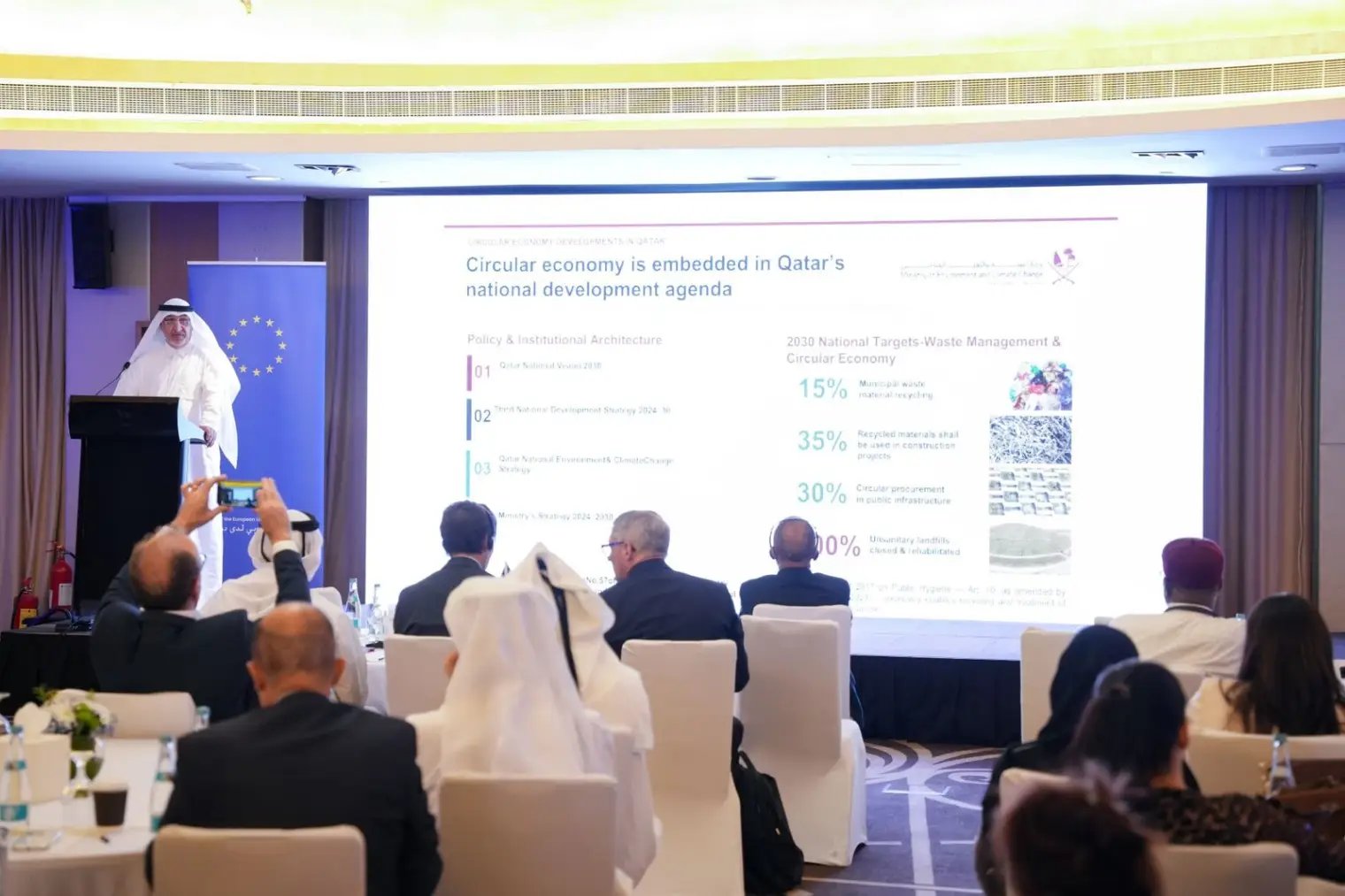
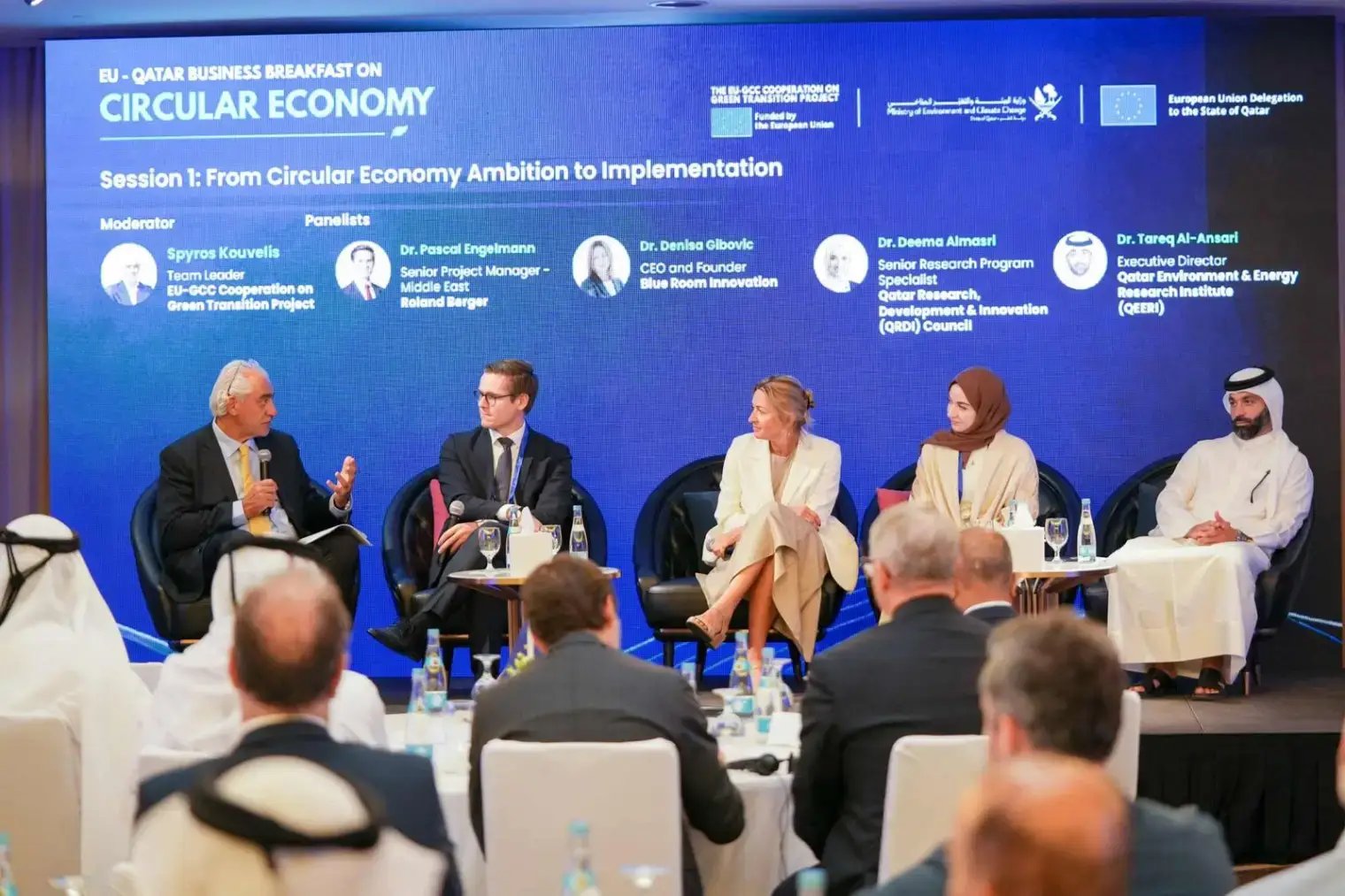
The first panel, “From Circular Economy Ambition to Implementation,” was moderated by Spyros Kouvelis, Team Leader of the EU-GCC Cooperation on Green Transition Project. Panelists included Dr. Pascal Engelmann of Roland Berger, Dr. Denisa Gibovic of Blue Room Innovation, Dr. Deema Almasri of the Qatar Research, Development and Innovation Council, and Dr. Tareq Al-Ansari of the Qatar Environment and Energy Research Institute.
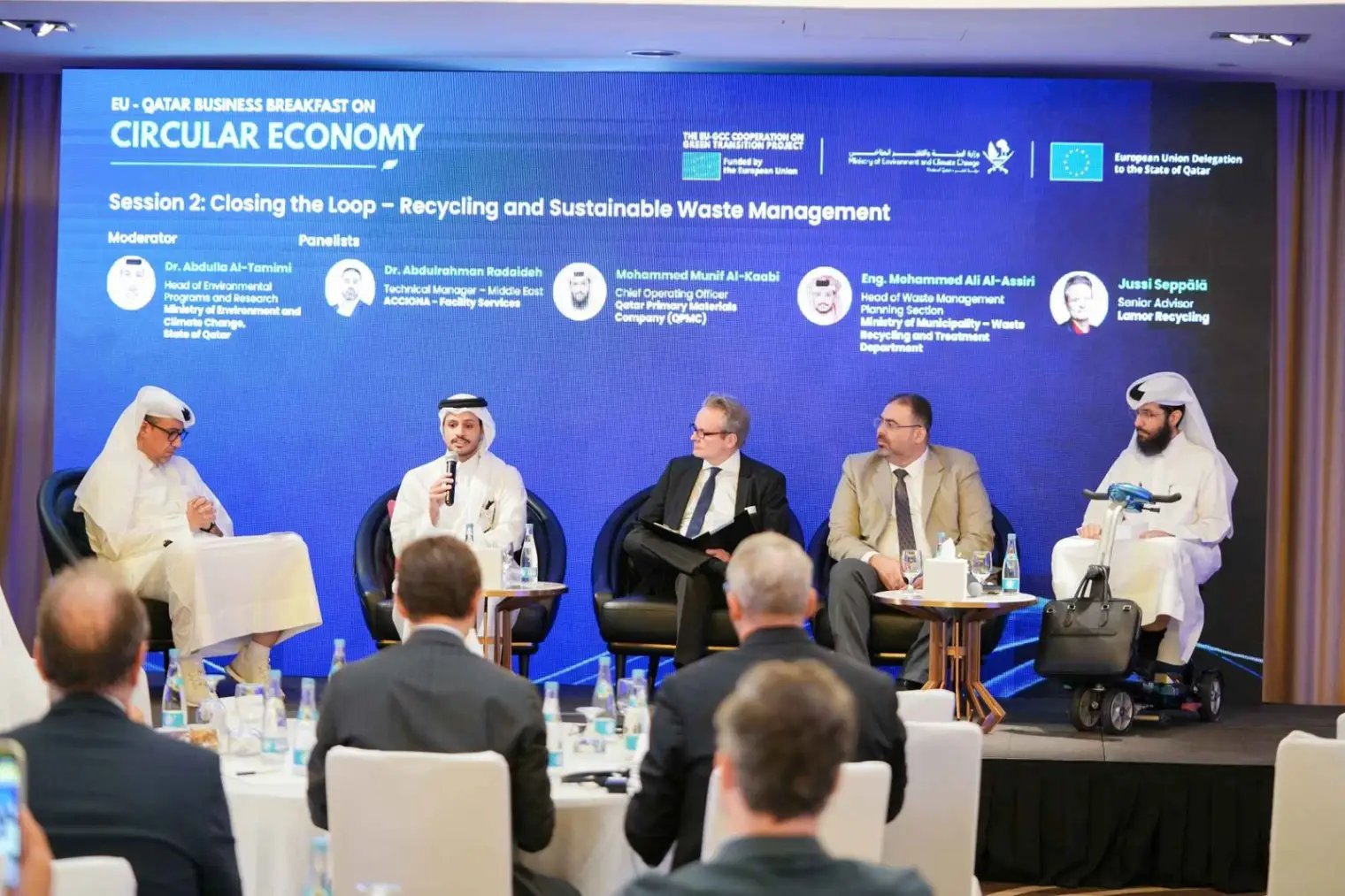
A second panel, “Closing the Loop – Recycling and Sustainable Waste Management,” examined the practical requirements for building effective recycling systems. It brought together Dr. Abdulrahman Radaideh of ACCIONA Facility Services, Mohammed Munif Al-Kaabi of Qatar Primary Materials Company, Eng. Mohammed Ali Al-Assiri of Qatar’s Ministry of Municipality, and Jussi Seppälä of Lamor Recycling.
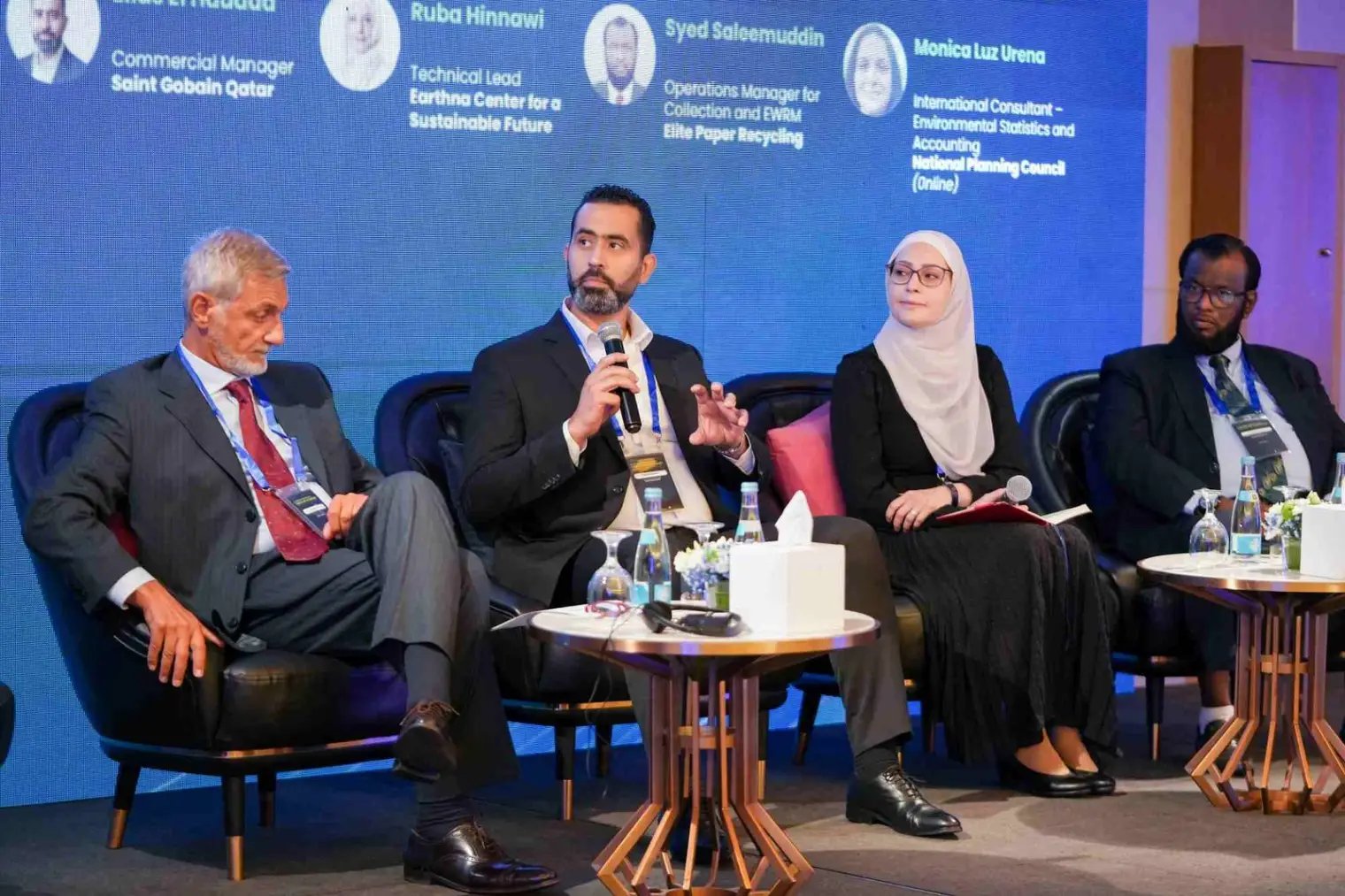
The third session, “Resource Efficiency and Circular Materials – Scalable Solutions,” explored scalable approaches to resource efficiency and sustainable materials. Speakers included Giorgio Bressi of Ducoli Achille, Elias El Haddad of Saint-Gobain Qatar, Ruba Hinnawi of Earthna, Syed Saleemuddin of Elite Paper Recycling and Monica Luz Urena of the National Planning Council.
Objectives
The business breakfast aimed to establish a new chapter of practical EU–Qatar cooperation on the circular economy while highlighting Qatar’s achievements and future ambitions.
Key objectives included:
- Strengthening cooperation between Qatar and the European Union on green transition initiatives.
- Sharing European policy experience, technologies and business solutions.
- Supporting Qatar’s transition toward a more resource-efficient circular economy.
- Promoting dialogue between government, industry, academia and research institutions.
- Identifying opportunities for investment, technical cooperation and knowledge exchange.
- Advancing practical approaches to recycling, waste management and sustainable materials.
Highlights
A major theme emerging from the discussions was the need to move beyond circular economy ambitions and focus on practical implementation, market readiness and scalable business solutions.
The first panel highlighted the importance of clearly defined value chains, reliable demand, trusted data, digital traceability and pathways that can take promising research and innovation from pilot projects to commercial applications.
Discussions on recycling and waste management emphasised the importance of an integrated system covering waste separation, collection, treatment, quality assurance and the creation of reliable markets for recovered materials. Speakers also highlighted the role of standards, certification, procurement requirements and predictable demand in encouraging investment in recycling capacity.
The event also underscored the importance of collaboration among policymakers, businesses, researchers and innovators in supporting Qatar’s sustainability ambitions and creating new opportunities for circular business models.
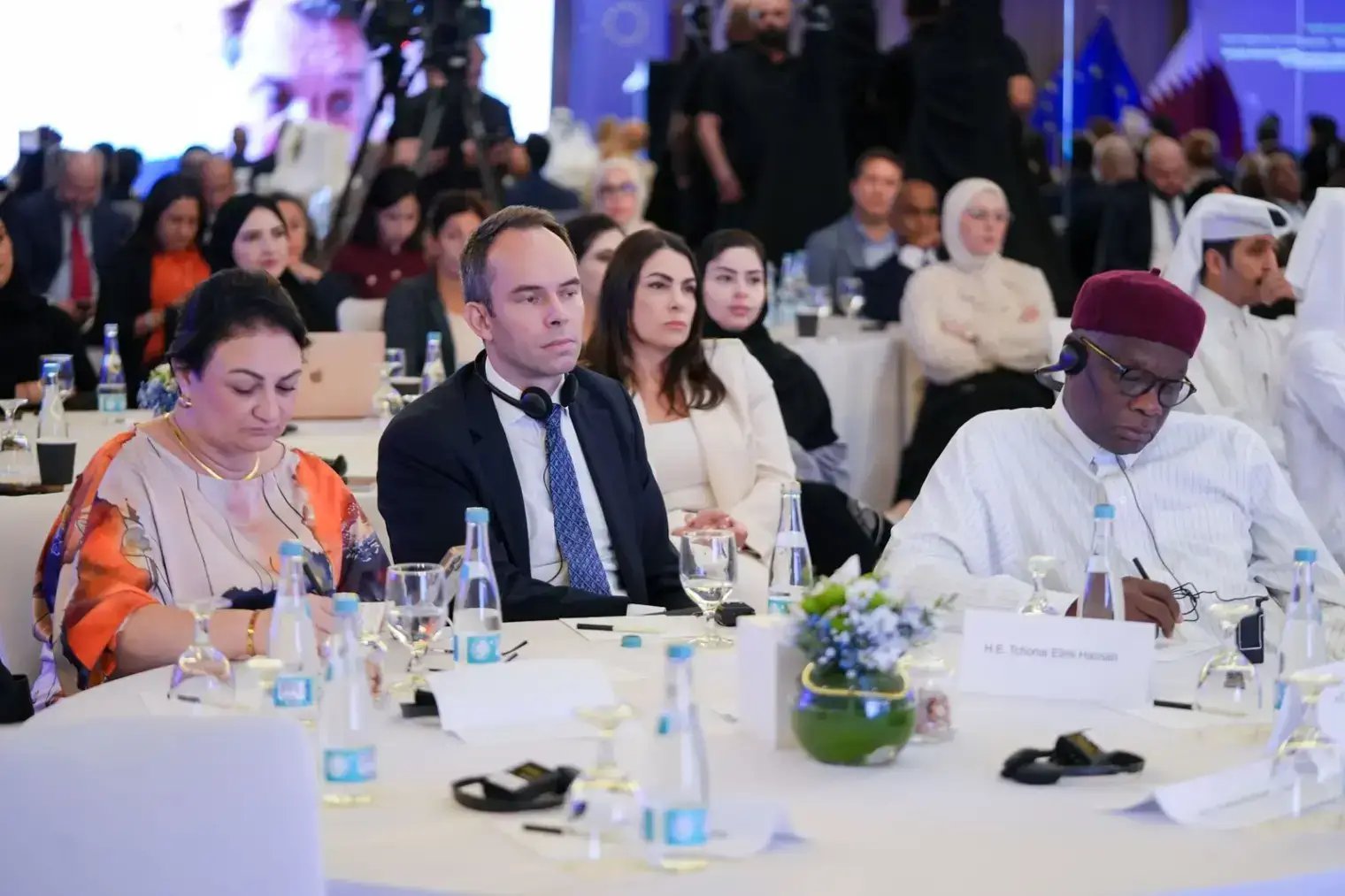
With more than 180 participants attending, the event demonstrated strong interest in strengthening EU–Qatar cooperation on circular economy and sustainable resource management. Organisers described the gathering as an important step toward turning dialogue into practical cooperation and future partnerships.
The program concluded with an open forum and closing remarks, followed by networking, giving participants an opportunity to continue discussions and explore potential partnerships.
Photos: Prasad | Video: Sharath


