





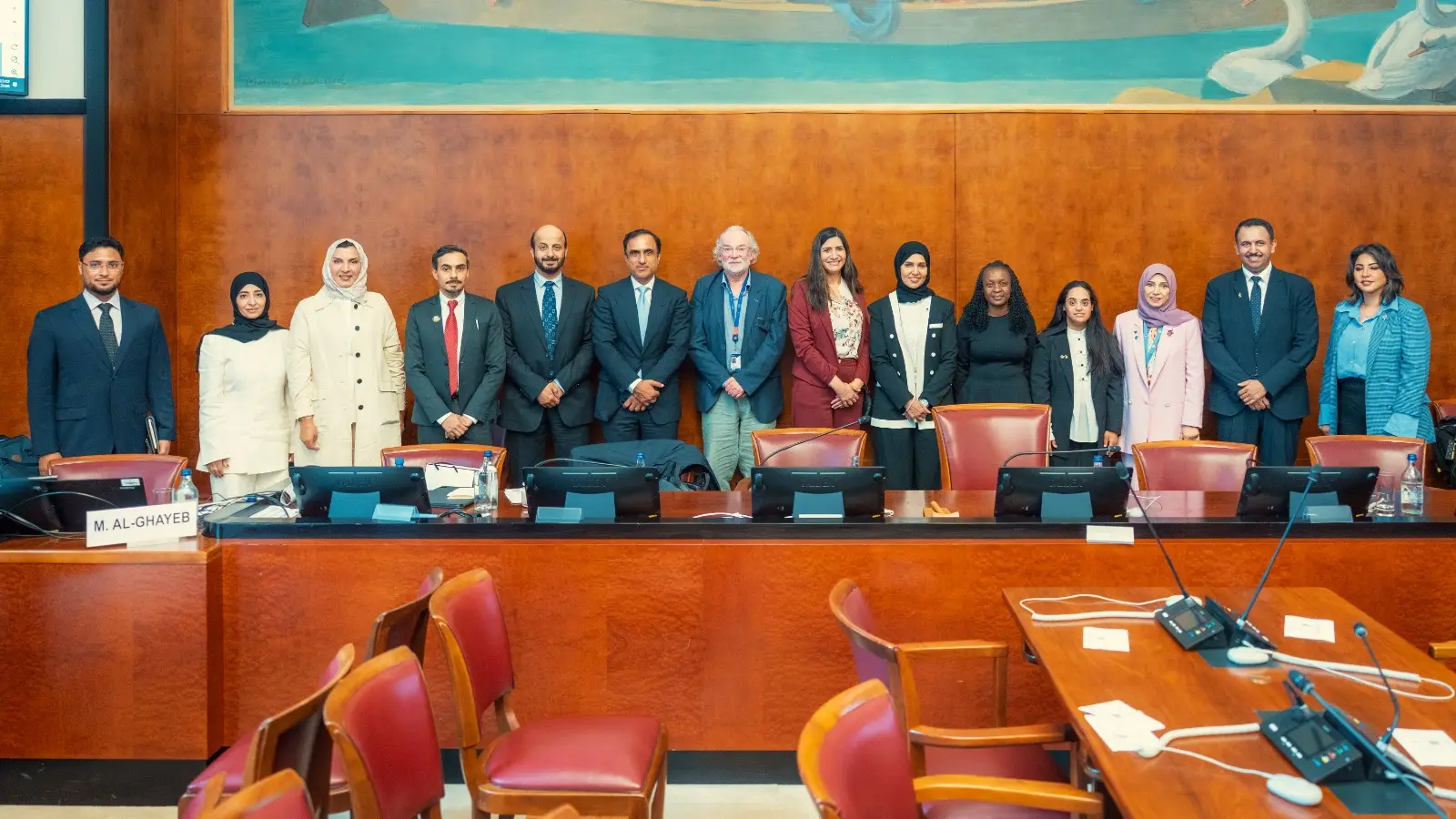
Geneva: The Permanent Mission of the State of Qatar to the United Nations Office in Geneva today co-organized a side event titled “From Narrative to Evidence: Advancing Indicator-Based Disability Reporting”, in cooperation with the Permanent Mission of the Cooperation Council for the Arab States of the Gulf to the UN Office in Geneva and the Executive Bureau of the Council of Ministers of Labor and Social Affairs in GCC States.
Held at the Palace of Nations in Geneva, the event marked the 20th anniversary of the adoption of the Convention on the Rights of Persons with Disabilities.
The event brought together representatives of diplomatic missions, international and regional organizations, institutions working on disability rights, and experts and specialists in data, statistics and human rights indicators.
In her opening remarks, Permanent Representative of the State of Qatar to the United Nations Office in Geneva, HE Dr. Hend Abdulrahman Al Muftah, reaffirmed Qatar’s commitment to international human rights conventions as an important component of strengthening the national framework for rights and freedoms.
She noted that Qatar has acceded to seven of the nine core international human rights conventions, in addition to a number of their optional protocols, and remains committed to fulfilling its reporting obligations and implementing the resulting commitments at the national level.
Regarding the Convention on the Rights of Persons with Disabilities, Dr. Al Muftah said Qatar was among the early countries to accede to the convention and has extended its efforts beyond the national level through regional and international cooperation in support of the rights of persons with disabilities.
She highlighted several key Qatari initiatives, including the submission and sponsorship of United Nations resolutions. These include the resolution establishing April 2 as World Autism Awareness Day, as well as the UN General Assembly resolution adopted in 2025 designating June 27 as the International Day of Deafblindness.
Qatar is also preparing to host the Fourth Global Disability Summit in Doha in 2028, in cooperation with the International Disability Alliance.
Dr. Al Muftah further underscored Qatar’s commitment to transparency, objectivity and constructive dialogue during the review of its latest report by the Committee on the Rights of Persons with Disabilities. She said this approach enables a realistic assessment of achievements and challenges while facilitating the exchange of experiences and best practices between Qatar and the Committee.
Director General of the Executive Bureau of the Council of Ministers of Labor and Social Affairs in GCC States Mohammed bin Hassan Al Obaidli also delivered an opening speech.
The event featured contributions from a range of international and regional experts, including Rehab Boursli of the UN Committee on the Rights of Persons with Disabilities; Ali Buharoon, Director of Population and Social Statistics at the GCC Statistical Center; Stefan Tromel, Senior Disability Specialist at the International Labour Organization; Mona Abdelgawad, an expert involved in preparing the third report on the prospects for implementing and monitoring the Convention; Mirriam Nthenge, Human Rights Advisor at the International Disability Alliance; Reem Khalifa Al Ajmi, Director of the Community Care Department at the Ministry of Social Development and Family; Aisha Abdullah Al Darbi, Director of the Dubai People of Determination Center in the UAE; and Dr. Khalifa Al Hilaa, Deputy Director-General of the Public Authority for Disability Affairs in Kuwait.
The discussion was moderated by Mohamed Al Ghaith, Director of Labor and Social Development at the Executive Bureau of the GCC Council of Ministers of Labor and Social Affairs.
The event underscored the growing need to strengthen reporting and monitoring mechanisms related to the rights of persons with disabilities. Discussions focused on moving beyond narrative reporting toward measurable indicators that can provide a clearer picture of progress, identify challenges and strengthen accountability.
Participants also emphasized the importance of using reliable data, statistics and human rights indicators to inform decision-making and develop more effective policies and programs that advance the rights and inclusion of persons with disabilities.
Photo: MOFA Qatar


