





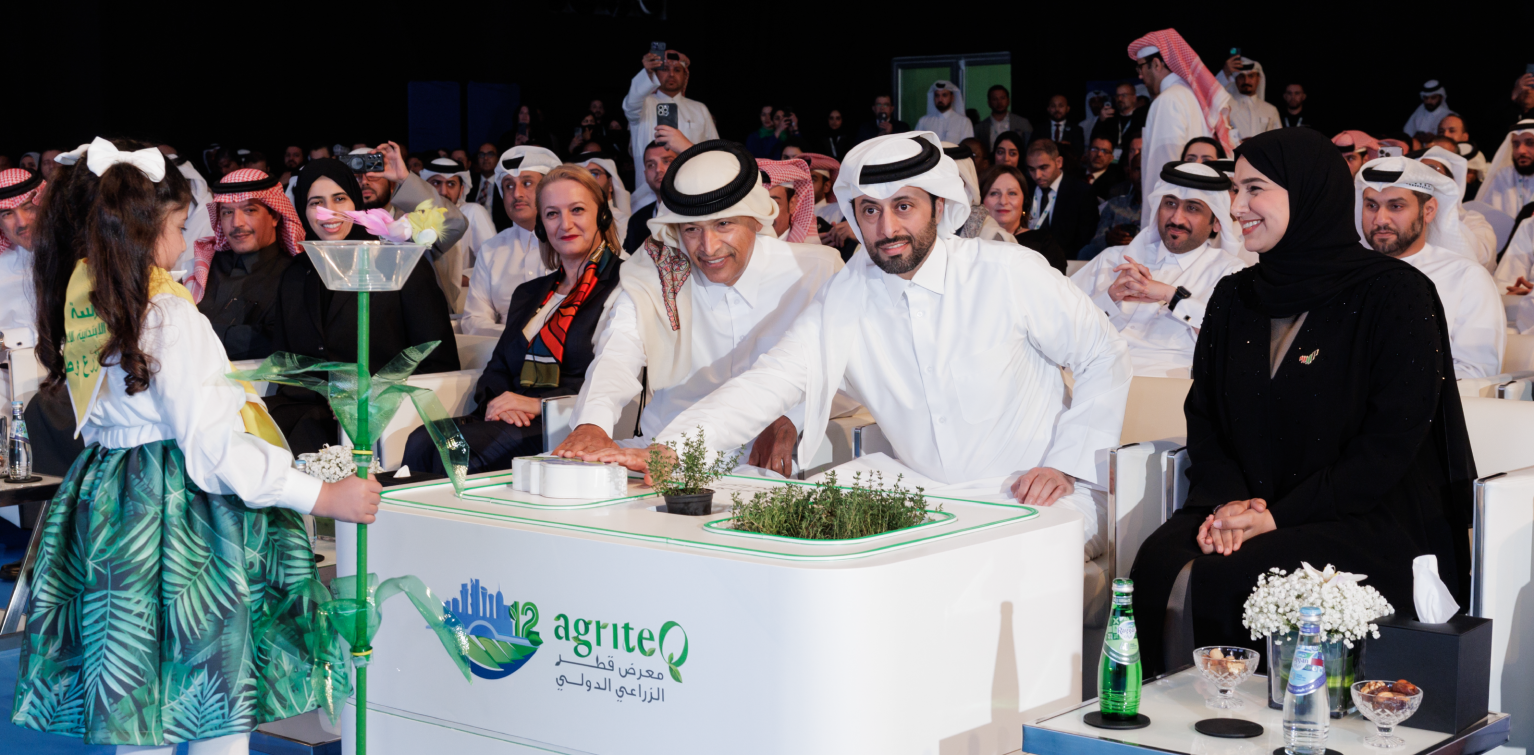
Doha: The 12th Qatar International Agricultural Exhibition (AgriteQ) wrapped up today, following a successful five-day run from 4 – 8 February at Katara Cultural Village.
Held under the patronage of HE Sheikh Mohammed bin Abdulrahman bin Jassim Al Thani, Prime Minister and Minister of Foreign Affairs, the exhibition served as a premier global platform for showcasing state-of-the-art agricultural innovations, research and products, advancing the sector’s development, in line with the Qatar National Vision 2030.
HE Abdullah bin Hamad bin Abdullah Al Attiya, Minister of Municipality, highlighted the particular significance of this year’s exhibition, which followed the launch of the National Food Security Strategy 2030. This strategic framework charts the course for enhancing food security as part of the Qatar National Vision 2030, underscoring the nation’s dedication to agricultural innovation and sustainable development.
This year’s edition saw participation from over 29 countries, with the United Arab Emirates as the guest of honour. HE Dr Amna bint Abdullah Al Dahak, the UAE’s Minister of Climate Change and Environment, highlighted that the UAE’s participation underscores the strong bilateral relations and collaborative efforts in agriculture and sustainable food security between the two nations.
Spanning a record layout of over 40,000sqm, the exhibition welcomed more than 10,000 visitors, including government officials, industry experts and investors, alongside 300 regional exhibitors displaying groundbreaking agricultural innovations.
The comprehensive program featured over 50 activities, including specialised conferences and forums, including the Camel Forum and Biotechnology Forum, as well as panel discussions on agricultural innovation, environmental sustainability and food security.
Visitors explored dedicated marketplaces for dates, honey, flowers and crops, with robust participation from 114 local farms, 24 honey producers and 24 date producers.
AgriteQ 2025 proved to be an invaluable platform for knowledge exchange and networking among agricultural specialists, fostering new partnerships and strengthening international trade cooperation. Its comprehensive program created opportunities for meaningful dialogue between industry leaders, researchers and investors within the agricultural sector.
Through its focus on modern agricultural technologies, the exhibition championed local production capabilities while promoting sustainable consumption practices. This dual emphasis aligned perfectly with Qatar’s national initiatives to address climate change challenges and promote agricultural sustainability.
Qatar’s remarkable progress in food security over the past five years stands as a testament to its commitment to agricultural innovation. The nation has achieved a 50 percent increase in fresh vegetable production, alongside impressive self-sufficiency rates across key sectors: 97 percent in dairy products, 98 percent in fresh poultry, and 33 percent in table eggs. These achievements are the direct result of implementing numerous innovative initiatives throughout the agricultural sector.
Source: GCO Qatar


